
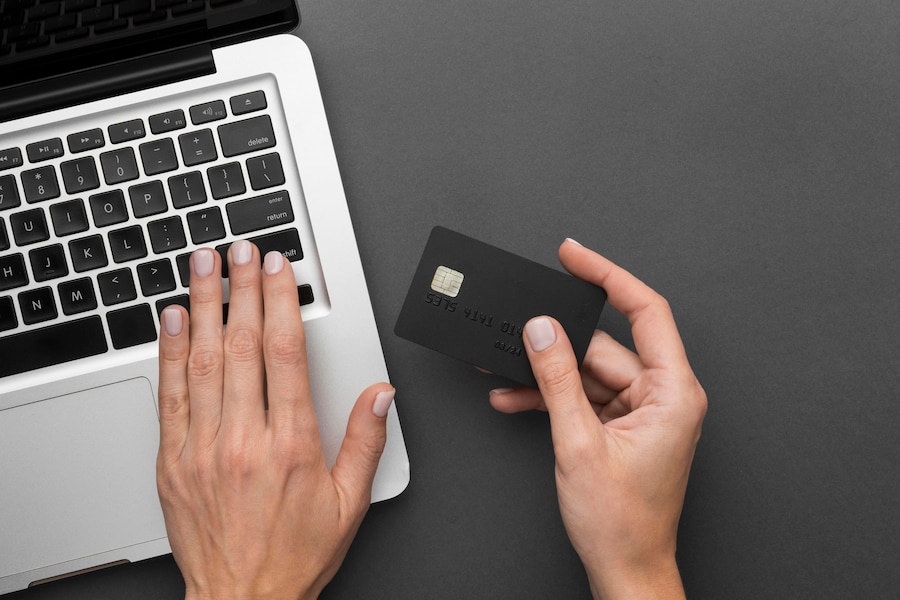
Digital payment privacy has become a battlefield where convenience fights anonymity, and most people don’t even realize they’re losing. Regular payment cards create detailed chronicles of financial behaviour that banks, merchants, and data brokers eagerly harvest. A different path exists through cryptocurrency cards that skip identity verification entirely. The Best No-KYC crypto card solutions flip traditional banking logic upside down – they process payments first and ask questions never. These cards represent more than just another payment option; they challenge the assumption that financial services must know everything about their users.
Every swipe tells a story
Traditional payment cards turn everyday purchases into data points for a massive surveillance apparatus. Banks don’t simply process transactions anymore. They build behavioural maps, predict future spending, and package these insights for whoever’s buying. Coffee shops know purchase patterns. Gas stations track route preferences. Grocery stores build preference profiles that would embarrass most personal shoppers.
This information spreads like digital wildfire through interconnected databases. Credit agencies vacuum it up. Insurance companies factor it into risk assessments. Marketing platforms transform it into targeted campaigns that seem almost telepathic. Government agencies access it through various legal channels, sometimes without warrants, often without users’ knowledge. The infrastructure treats financial privacy as obsolete, a relic from the cash era that modern society has outgrown. What started as fraud prevention morphed into comprehensive lifestyle monitoring.
Cards without the paperwork
No-KYC crypto cards operate in a parallel financial universe with different rules. Load cryptocurrency into a wallet, request a card, and start spending immediately. The simplicity masks sophisticated technology working underneath. The mechanics involve:
- Cryptographic addresses replacing names and social security numbers
- Real-time conversion systems transforming digital assets into spendable currency
- Bridge protocols connecting blockchain networks to traditional payment rails
- Distributed systems that never centralize user information
Merchants process these transactions identically to regular card payments. Their systems see standard payment data without indicating that cryptocurrency funds the purchase. The actual source remains obscured behind layers of cryptographic abstraction. Some providers generate disposable card numbers for single transactions. Others maintain persistent numbers that reveal nothing about the cardholder—the entire ecosystem functions without collecting, storing, or transmitting personal identifiers.
Hidden but not invisible
Blockchain transparency creates an interesting paradox for privacy seekers. All transactions exist on public ledgers, viewable by anyone with internet access. Yet these records contain only cryptographic addresses – long characters that mean nothing without additional context.
The pseudonymous nature of blockchain means privacy depends heavily on user behaviour. Careless habits create connections between addresses and identities. Innovative practices maintain separation. Shipping addresses, subscription services, and regular merchants all potentially compromise anonymity. Some users layer additional privacy tools. Mixing services jumble transaction trails. Privacy-focused cryptocurrencies add cryptographic shields. The paranoid use different wallets for different purposes, never crossing streams. Most people land in the middle, accepting improved privacy over traditional banking while acknowledging that perfect anonymity remains elusive.
No safety net attached
The absence of identity verification means the absence of traditional protections. No fraud departments investigate suspicious charges. No customer service representatives reset forgotten passwords. No regulatory bodies mandate reimbursement for unauthorized transactions. Users become their security team, and the IT department and insurance company are rolled into one.
Yet this model eliminates entire categories of risk. Data breaches can’t expose information that was never collected. Identity thieves find nothing to steal. Profiling algorithms have no profiles to analyze. The trade-off becomes clear: accept total responsibility for security in exchange for freedom from surveillance capitalism. Some find this terrifying. Others find it liberating. The market’s growth suggests many prefer controlling their security over trusting institutions that regularly fail at protecting customer data.
Privacy gets an upgrade
Regulatory responses to no-KYC cards vary wildly across jurisdictions. Some governments ban them outright, viewing anonymity as inherently suspicious. Others embrace them as legitimate financial innovation. Most struggle to find a middle ground between privacy rights and oversight requirements.
Technology continues advancing regardless of regulatory uncertainty. Cryptographic innovations promise even stronger privacy protections. Zero-knowledge proofs enable verification without revelation. Homomorphic encryption allows computation on encrypted data. Decentralised identity systems could satisfy compliance requirements without sacrificing privacy. The momentum seems irreversible. Traditional financial institutions now explore privacy-preserving technologies, recognising that customer demand for financial privacy isn’t disappearing. The transformation won’t happen overnight, but the direction appears clear. Payment systems that respect user privacy will gradually replace those that treat it as optional. No-KYC crypto cards represent the opening move in a longer game where privacy becomes a competitive advantage rather than a regulatory burden.
